

Sydney remains the largest medical employment market in Australia, with more than 15,000 doctors working across its public and private hospital networks. The concentration of tertiary teaching hospitals, specialist centres, and suburban networks creates a wide spread of opportunities across experience levels and clinical disciplines. Understanding how doctor jobs Sydney are structured, credentialled, and filled in 2026 means looking beyond advertised vacancies to the systems that drive supply and demand at both metro and facility level.
What Drives Demand for Doctor Jobs Sydney in 2026
NSW Health's Future Health strategy outlines sustained workforce expansion across Greater Sydney, targeting increased capacity in Emergency Medicine, Intensive Care, and Surgical subspecialties. That policy intent translates to ongoing recruitment across Sydney Local Health Districts, with RPA, Westmead, St Vincent's, and Liverpool all running continuous staff replacement cycles.

Private hospital groups add another layer. Ramsay and Healthscope facilities across Macquarie Park, Bella Vista, and the Eastern Suburbs operate high-turnover Visiting Medical Officer rosters that generate short-term and extended vacancies year-round. These aren't always advertised publicly. Many are filled through direct approaches, internal networks, or medical locum placements that convert to longer engagements.
Demand isn't evenly distributed. Anaesthetics, Emergency Medicine, and Psychiatry currently show higher vacancy rates than General Medicine or Paediatrics, driven partly by procedural caseload growth and partly by workforce attrition. NSW Health workforce modelling flags particular gaps in surgical support specialties and acute care, which aligns with what facilities report when sourcing cover.
Specialist Pathways and Registration Realities
International Medical Graduates make up roughly 40% of the Sydney doctor workforce, and registration pathways have shifted noticeably in 2026. AHPRA's Expedited Specialist pathway now covers additional disciplines, reducing time-to-practice for eligible overseas specialists with comparable training. That's opened new entry routes for Anaesthetists and Psychiatrists, two of the highest-demand specialties across Sydney hospitals.
For locally trained doctors, Fellowship pathways through RACS, ANZCA, RANZCOG, and other colleges still determine specialist progression. Most Sydney teaching hospitals maintain accredited training positions, but competitive ratios mean many trainees complete portions of their training in regional or interstate facilities before returning to metro roles. That creates both a pipeline and a churn effect, with mid-career specialists often moving between public, private, and locum work.
Credentialling requirements vary significantly by facility and role type. Public hospitals typically require AHPRA registration, current medical indemnity, and evidence of recent practice in the relevant specialty. Private facilities often add facility-specific privileging processes and peer reference checks. Doctor credentialling managed in-house by placement agencies ensures these elements are verified before a doctor starts, which is particularly relevant for short-term cover where there's limited lead time.
Locum Work and Short-Term Placements Across Sydney
Sydney generates more locum demand than any other Australian city, driven by leave cover, peak-period staffing, and unfilled permanent roles where interim arrangements stretch for months. Emergency Departments at facilities like Blacktown, Nepean, and St George run regular locum rosters to maintain safe staffing ratios. Anaesthetic departments often book locum cover for elective surgery lists when their VMO rosters have gaps.
| Specialty | Typical Shift Length | Common Facilities | Average Notice Period |
|---|---|---|---|
| Emergency Medicine | 8–10 hours | RPA, Westmead, Liverpool | 1–7 days |
| Anaesthetics | Full day or half day | Private day surgeries, Ramsay sites | 3–14 days |
| Psychiatry | Variable (4–8 hours) | Concord, Cumberland | 7–21 days |
| ICU | 12 hours | St Vincent's, Royal North Shore | 3–10 days |
Short-term medical locum placements involve more than filling a gap on a roster. Facilities need confidence that the doctor understands their systems, can work independently, and won't create handover issues when the shift ends. That's why credentialling processes for locum work mirror those for permanent roles, even if the engagement is only a week.

Best Practice Medical verifies AHPRA registration, medical indemnity insurance, and facility-specific requirements before any doctor is placed, with clinical oversight from a practising clinician ensuring credentialling standards are maintained across every engagement. That process removes ambiguity for both the doctor and the hospital, particularly when placements are confirmed on short notice.
Public Hospital Networks vs Private Facilities
Sydney's public hospital system operates through Local Health Districts, each with its own staffing structures and recruitment processes. South Western Sydney, Western Sydney, and Sydney LHDs all manage large multi-site networks where doctor jobs Sydney are often advertised through centralised HR portals. These roles include Staff Specialist positions, Registrar training posts, and Career Medical Officer appointments, with contracts typically ranging from one to five years.
Private hospitals operate differently. Many rely on Visiting Medical Officer models where specialists hold admitting rights and bill privately for their clinical work. The hospital pays a session fee or facility fee, and the doctor invoices for consultations and procedures. This creates a different employment relationship compared to salaried public roles, and it also means many private hospital doctor jobs Sydney aren't advertised in the traditional sense. They're negotiated directly or arranged through recruitment agencies with existing facility relationships.
Hybrid models are common. A surgeon might hold a part-time public appointment at Royal Prince Alfred while maintaining VMO privileges at several private facilities. An Anaesthetist could work three days per week at Westmead and pick up locum shifts at Healthscope sites across the city. This flexibility is part of what attracts doctors to Sydney, but it also fragments the employment market, making it harder to track where opportunities actually sit.
How Facilities Fill Urgent and Extended Gaps
When a hospital has an unplanned vacancy, whether from sudden resignation, extended sick leave, or a failed recruitment campaign, the response depends on role type and urgency. Emergency departments and ICUs can't leave shifts unfilled, so they typically turn to locum agencies with pre-approved supplier status. Public facilities in NSW, QLD, and VIC often have preferred supplier panels that agencies must be part of before they can provide staff. This procurement layer adds friction but also ensures a baseline compliance standard.
Extended placements for parental leave or sabbaticals are usually planned further in advance, giving facilities time to source a suitable locum or advertise the role as a fixed-term contract. These engagements often run for several months and function much like permanent roles in terms of onboarding and integration. The doctor attends departmental meetings, participates in rosters, and becomes part of the clinical team for the duration of the placement.
Roster management at scale requires a different approach. Facilities managing complex or ongoing locum requirements often engage agencies to handle partial or full roster planning, identifying gaps weeks ahead and maintaining continuity of cover across departments. This moves beyond reactive shift-filling to proactive workforce planning, particularly relevant in high-turnover specialties like Emergency Medicine and Psychiatry.
Geographic and Cultural Considerations Within Sydney
Sydney's medical employment market isn't geographically uniform. Working at Royal North Shore in the leafy North Shore carries a different cultural and logistical reality than working at Blacktown or Campbelltown in the outer west. Commute times, patient demographics, caseload acuity, and departmental culture all vary, and doctors choose roles based on more than just salary and specialty.
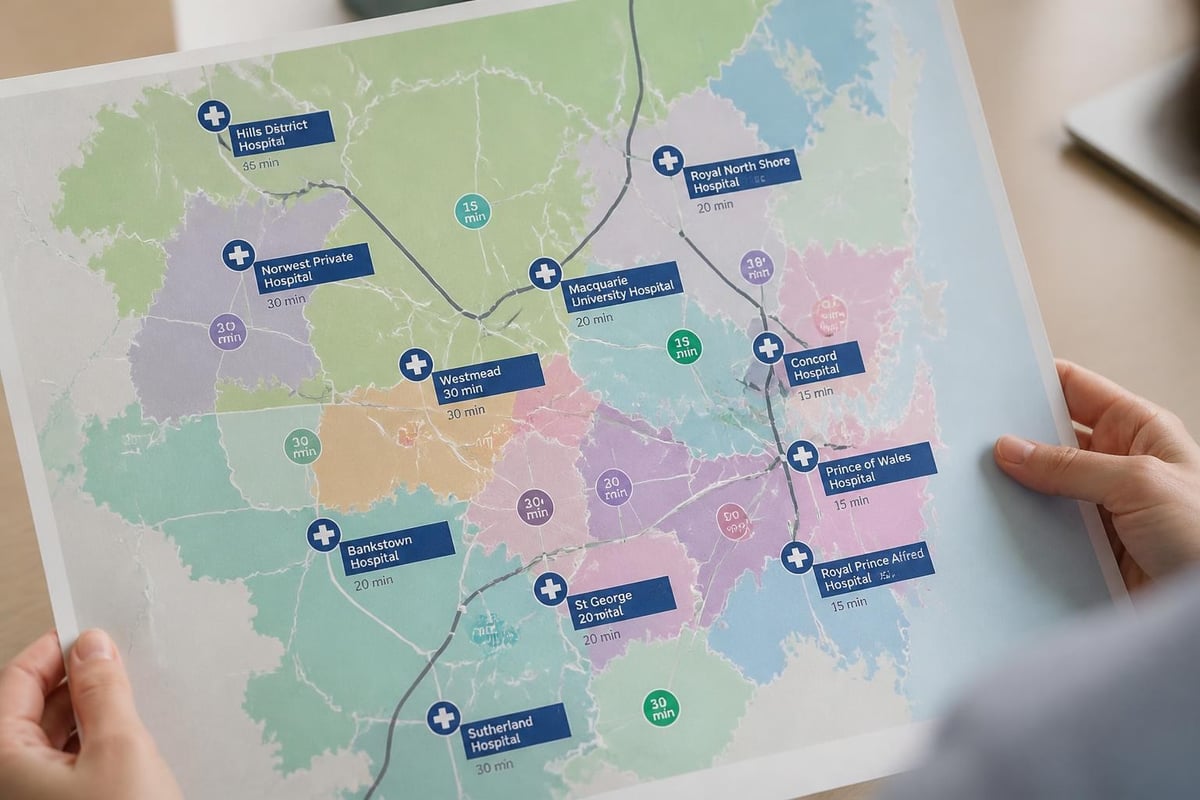
Public hospitals in Western Sydney generally see higher patient volumes, more complex social determinants of health, and greater diversity in presenting conditions. Private facilities in the Eastern Suburbs tend to have lower emergency volumes but higher elective surgical throughput. These differences shape day-to-day work and influence which doctor jobs Sydney appeal to different career stages and lifestyle priorities.
International doctors often ask about cultural fit and workplace expectations. Sydney hospitals are highly multicultural, with staff and patient populations reflecting the city's diversity. Communication standards are high, and clinical documentation expectations are strict. Doctors trained overseas sometimes underestimate the administrative load, particularly around discharge summaries, referral letters, and medico-legal record-keeping. Understanding that before starting makes the transition smoother.
Credentialling, Compliance, and Placement Quality
Every doctor placement in an Australian hospital requires verification of registration, indemnity, and qualifications. Public hospitals manage this internally through their HR and medical workforce units. Private facilities often rely on external verification, particularly for locum and VMO engagements where the doctor isn't a direct employee. Recruitment agencies that handle credentialling in-house reduce the administrative burden on both the doctor and the facility, provided the process is thorough and auditable.
ISO 9001:2015 certification provides independent assurance that credentialling processes meet defined standards and are audited annually. For hospitals engaging locum doctors through an agency, knowing the compliance framework is certified adds a layer of confidence, particularly when placements happen on short notice and there's limited time for internal checks.
Credentialling isn't just a tick-box exercise. It affects patient safety, medico-legal risk, and the hospital's accreditation status. A facility that books a locum doctor without verifying current AHPRA registration or indemnity cover exposes itself to significant liability. Similarly, a doctor who starts work without understanding facility-specific protocols or credentialling requirements risks professional and legal consequences if something goes wrong.
What Doctors Should Know Before Applying
Doctor jobs Sydney span a wide range of employment types, and understanding the distinctions matters when evaluating opportunities. Salaried Staff Specialist roles in public hospitals come with defined award rates, superannuation, and leave entitlements. Locum work is typically contracted, often through an agency, and paid at higher hourly rates but without leave or super included unless negotiated separately. VMO arrangements involve private billing and session fees, with the doctor responsible for their own tax, insurance, and professional development.
Contract terms vary. Public hospital contracts often include clauses around notice periods, performance reviews, and renewal options. Locum contracts are usually simpler but need clarity around shift rates, cancellation policies, and payment terms. Some agencies handle invoicing and payment follow-up on the doctor's behalf, which removes the administrative load of chasing outstanding amounts from facilities.
Location and accommodation matter for doctors considering roles outside their current base. Locums for doctors moving between facilities or states often need travel and accommodation arranged in advance, particularly for regional or interstate placements where local knowledge is limited. Agencies that manage logistics end-to-end reduce the friction of taking on short-term work in unfamiliar locations.
Navigating the Sydney Hospital Landscape in 2026
Sydney's hospital sector includes more than 40 major facilities across public and private networks. Knowing which hospitals specialise in which disciplines helps doctors target applications effectively. RPA and Royal North Shore are tertiary referral centres with major trauma and complex subspecialty services. Westmead handles high-volume paediatrics and adult medicine. St Vincent's is known for cardiothoracic and HIV/infectious diseases work. Liverpool serves one of the most diverse catchment areas in the country.
Private hospital differentiation is often less visible but equally important. Some Ramsay and Healthscope sites focus on elective orthopaedics and general surgery. Others run obstetric and neonatal services. A few maintain ICU and high-dependency units. Matching your clinical interests and experience to the facility's caseload improves both job satisfaction and career development.
For doctors exploring specialist medical doctor roles, understanding how Sydney's training and employment pathways intersect is critical. Many specialists spend their early post-Fellowship years in locum or short-term roles while building private practice or waiting for substantive public appointments. That's not a detour. It's a normal part of career progression in a competitive metro market.
Current Labour Market Data and Trends
Australian Bureau of Statistics labour data shows steady growth in medical practitioner employment across NSW, with Sydney accounting for the majority of new roles. Vacancy rates in 2026 remain above pre-pandemic levels in several specialties, driven partly by workforce retirements and partly by increased service demand. Emergency Medicine and Anaesthetics continue to show the tightest supply-demand balance, with locum rates reflecting that scarcity.
Salary expectations vary by role type and experience. Junior doctors in public hospitals earn award rates set by the NSW Health enterprise agreement. Mid-career specialists in salaried roles typically sit between 250k and 400k depending on seniority and specialty. Locum rates for specialists can exceed 200 dollars per hour for in-demand disciplines, though those rates are contractor rates without leave or superannuation built in.
Understanding total remuneration rather than headline rates matters when comparing opportunities. A locum role paying 220 per hour might look attractive compared to a salaried position at 320k, but when you factor in unpaid leave, lack of super, and income volatility, the gap narrows. Conversely, locum work offers flexibility and variety that salaried roles don't, which has value beyond the dollar figure.
What's Different About Doctor Jobs Sydney Compared to Other Cities
Sydney's scale creates both opportunity and competition. There are more roles available than in Melbourne, Brisbane, or Perth, but there are also more applicants. International doctors often target Sydney first because of its concentration of teaching hospitals and established migrant communities, which increases competition for training posts and early-career roles.
The cost of living in Sydney is higher, and that affects net income despite higher nominal salaries. Housing, transport, and childcare costs all impact take-home pay, particularly for doctors in their first five years post-graduation. Some doctors choose to live further from the city centre to reduce housing costs, which then increases commute time. Others prioritise proximity to work and accept higher rent. These trade-offs are starker in Sydney than in smaller cities.
Professional networks in Sydney are dense and well-established. College events, specialty society meetings, and hospital grand rounds happen frequently, and building connections within your specialty is easier when the critical mass of practitioners is high. That network effect accelerates career progression for doctors willing to engage with the professional community beyond their immediate workplace.
Doctor jobs Sydney in 2026 reflect a complex, high-volume market where opportunities span specialties, employment models, and facility types. Success depends on understanding credentialling realities, recognising how facilities fill urgent and planned gaps, and aligning your career stage with the right role structure. Best Practice Medical connects doctors with locum opportunities across Sydney's public and private hospital networks, managing credentialling, compliance, and placement logistics so you can focus on clinical work rather than administrative follow-up.