

A gp medical doctor occupies one of the most complex roles in modern healthcare. They are the first point of contact for the majority of health presentations, the coordinator of ongoing care, and often the only doctor a patient will see for months or years at a time. In Australia, the pathway to becoming a gp medical doctor is well-defined but demanding. The work itself varies enormously depending on location, practice model, and patient demographic. For those considering locum work in primary care, understanding the full scope of the role and the credentialling expectations is essential before your first shift.
What defines a gp medical doctor
The term "gp medical doctor" describes a doctor who has completed specialist training through the Royal Australian College of General Practitioners (RACGP) or the Australian College of Rural and Remote Medicine (ACRRM). Both colleges award Fellowship, which is the recognised specialist qualification for general practice in Australia. Before Fellowship, a doctor is a GP registrar. After Fellowship, they are a Fellow and can practice independently without supervision.
A gp medical doctor manages undifferentiated presentations. That means patients arrive without a diagnosis, often without clarity about which system is involved. The gp medical doctor performs triage, investigation, and initial management. They also coordinate care across other specialties, manage chronic disease, provide preventive health interventions, and maintain continuity over years. The scope of practice for a GP is broader than most hospital specialties but also less procedurally focused in many settings.
Training pathway
The pathway to becoming a gp medical doctor in Australia begins after internship and at least one year of supervised hospital work. Entry to GP training requires selection through RACGP or ACRRM. Training takes a minimum of three years full-time equivalent and includes both community-based GP terms and hospital terms in disciplines such as Emergency Medicine, Paediatrics, Obstetrics, and Psychiatry.
GP registrars work under supervision. The level of supervision decreases as training progresses, but all patient encounters during training are formally overseen by a qualified supervisor. Registrars are expected to demonstrate competence across core clinical areas, procedural skills where relevant, and professional behaviours including communication, cultural safety, and clinical reasoning.
Assessment occurs throughout training. RACGP uses the Australian General Practice Training (AGPT) program structure, which includes workplace-based assessments, case-based discussions, and three summative exams. ACRRM has a similar assessment framework tailored to rural and remote contexts. Both pathways require evidence of competence before Fellowship is awarded.

Scope of practice in different settings
A gp medical doctor in metropolitan private practice works differently from one in a rural hospital setting. The clinical scope overlaps, but the procedural expectations, after-hours responsibility, and patient acuity vary significantly.
In metropolitan private practice, the gp medical doctor typically sees patients by appointment. Consultations are billed through Medicare, with the doctor as the provider. The scope includes chronic disease management, mental health care plans, immunisations, minor procedures such as skin excisions, women's health, paediatric care, and geriatric medicine. Continuity is high. A patient may see the same doctor for decades.
In rural and remote settings, the gp medical doctor often has broader procedural responsibilities. This can include obstetric deliveries, advanced emergency care, anaesthetics for minor surgery, and inpatient management. Many rural gp medical doctors work as Visiting Medical Officers (VMOs) to the local hospital in addition to their community clinic work. The distinction between hospital and community blurs.
| Setting | Typical scope | Supervision model | After-hours expectation |
|---|---|---|---|
| Metro private practice | Consultations, chronic disease, minor procedures | Independent post-Fellowship | Rare, covered by deputising service |
| Rural practice | Consultations, emergency, inpatient, obstetrics | Independent or peer-supported | High, often on-call roster |
| Community health centre | Consultations, care coordination, public health | Salaried, team-based | Low, centre-based hours |
| Locum (hospital VMO) | Inpatient ward care, emergency cover | Independent, facility-credentialled | Variable, shift-based |
For those considering locum work in general practice, it is critical to clarify scope expectations before accepting a placement. A locum gp medical doctor in a rural facility may be expected to manage ward rounds, emergency presentations, and minor theatre cases. A locum in a metro practice is more likely to see booked consultations with occasional urgent add-ons.
Credentialling and compliance for locum GPs
Credentialling for a gp medical doctor working locum shifts is more detailed than many doctors expect. Even if you hold RACGP or ACRRM Fellowship, each facility will assess your scope of practice against their specific requirements. This is particularly true for hospital VMO roles, where the gp medical doctor may be working outside a pure community consultation model.
Before any doctor is placed, credentialling and compliance verification ensures AHPRA registration is current, medical indemnity insurance covers the intended scope, and relevant college memberships are valid. For gp medical doctors working in hospitals, this also includes confirmation of competence in procedural skills such as intubation, suturing, or obstetric emergency management. Facilities differ in their requirements. A gp medical doctor credentialled for one hospital's emergency department may not automatically be approved for another.
The process is not instantaneous. Credentialling can take several weeks if documents are incomplete or if additional training certificates are needed. For locum agencies managing this on behalf of both the doctor and the facility, having a clinical overseer who understands the difference between a metro GP's scope and a rural VMO's scope is essential. Brad Nelmes, a practising clinician, oversees credentialling standards at Best Practice Medical. The agency holds ISO 9001:2015 certification, meaning the process is audited annually.
Common credentialling gaps
Gaps in credentialling most often arise around procedural currency. A gp medical doctor who completed their training five years ago but has worked exclusively in a consultation-based practice may no longer meet the currency requirements for obstetric or anaesthetic work in a rural hospital. Facilities ask for evidence of recent practice, not just historical competence.
Another common issue is indemnity limits. A gp medical doctor working in private practice typically holds indemnity that covers consultations and minor procedures. If that same doctor accepts a locum shift in a hospital emergency department, they may need higher limits or additional cover for higher-risk procedures. This needs to be confirmed before the shift, not discovered during it.

Differences between GP registrars and Fellows
A gp medical doctor who is a registrar and a gp medical doctor who is a Fellow are not interchangeable from a credentialling or legal perspective. Registrars work under supervision. Their scope is defined by their training plan and their supervisor's scope. They cannot bill independently as specialists, and they cannot work in unsupervised settings.
Once Fellowship is awarded, the gp medical doctor can work independently. They can bill Medicare as a specialist in general practice (item 23 consults and higher complexity items). They can apply for VMO positions, accept locum work without a supervisor, and make autonomous clinical decisions within their scope of practice.
For facilities engaging a gp medical doctor on a locum basis, the distinction matters. A registrar placement requires a supervising Fellow on site or immediately available. A Fellow placement does not. The pay structure also differs. Fellows command higher rates, reflecting their independent status and broader responsibility.
Implications for locum work
Locum opportunities for gp medical doctors who are registrars exist but are more limited. Most registrar locum shifts occur within their training network, where supervision arrangements are already in place. A registrar cannot accept an ad-hoc weekend shift at a rural hospital unless a credentialled supervisor is present and formally assigned.
Fellows have significantly more locum flexibility. They can accept short-notice shifts, work across multiple facilities, and be credentialled for a wider range of clinical activities. This is one reason many gp medical doctors pursue Fellowship even if they do not plan to work in traditional general practice long-term. Fellowship opens access to locum roles in emergency departments, inpatient care, and public health that would otherwise require hospital-based specialist qualifications.
Patient safety in primary care settings
Primary care is where most medical errors are identified and managed. A gp medical doctor sees patients with undiagnosed conditions, unclear symptom patterns, and incomplete information. Diagnostic error is a recognised risk. According to WHO guidance on safer primary care, the most common safety issues in general practice relate to diagnosis, prescribing, and communication.
A gp medical doctor manages this risk through structured clinical reasoning, appropriate investigation, and safety-netting. Safety-netting means explaining to the patient what symptoms should prompt re-presentation, what timeframe to expect for improvement, and when to escalate. This is particularly important in primary care, where follow-up is often patient-initiated rather than system-driven.
Prescribing safety is another priority. A gp medical doctor often manages complex polypharmacy in elderly patients, balancing multiple conditions and minimising drug interactions. Errors occur when medication lists are incomplete, when dosing is not adjusted for renal function, or when a new script is written without checking current medications. Electronic prescribing and integrated medical records reduce but do not eliminate this risk.
Communication and handover
For a gp medical doctor working locum shifts, communication becomes even more critical. You do not have the continuity of care that a regular gp medical doctor builds with their patients. You may not have access to the full medical history. You need to document clearly, communicate findings to the patient's regular doctor, and ensure any red flags are escalated immediately.
Handover in general practice is often informal. A patient who sees a locum gp medical doctor for an acute issue will return to their regular doctor for follow-up. If the locum doctor does not document the presentation clearly or does not communicate directly with the regular doctor, continuity is broken. This is a known safety gap. Facilities using locum gp medical doctors regularly should have a structured handover process, not just clinical notes.
Telehealth and digital-first care models
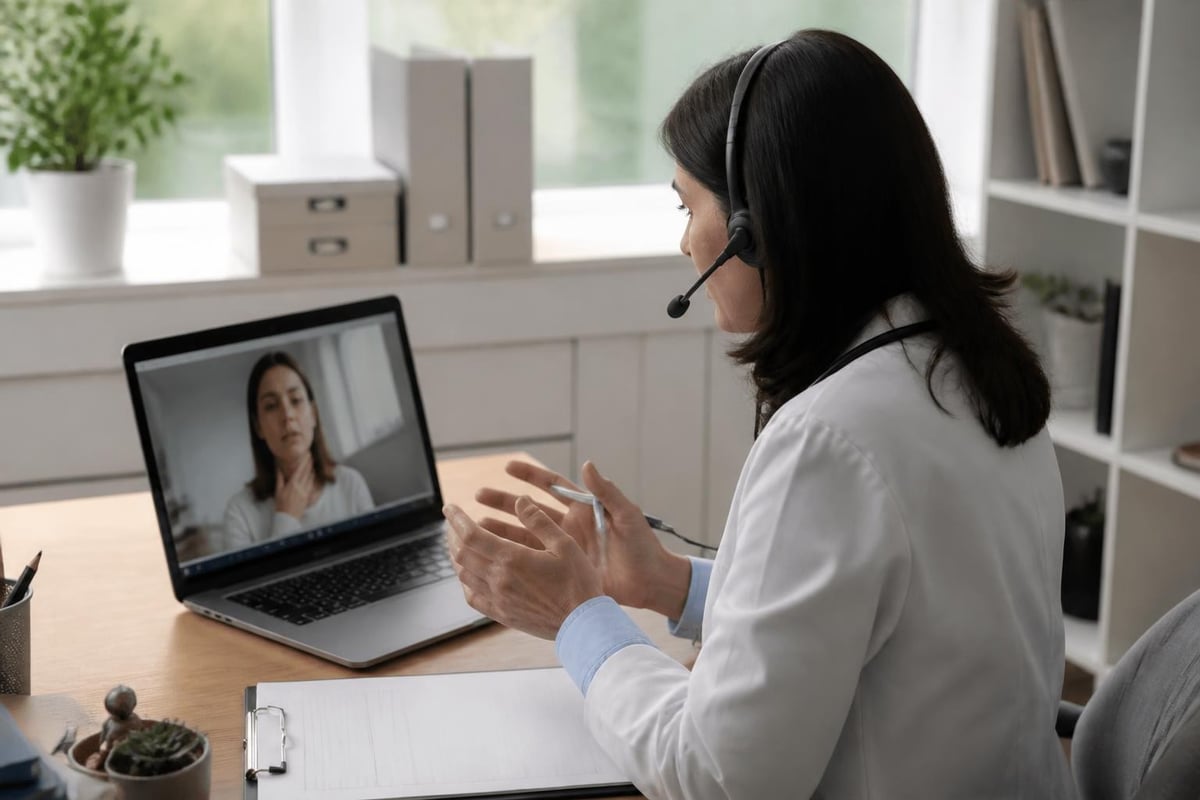
Telehealth became standard during the COVID-19 pandemic and remains embedded in general practice. A gp medical doctor now routinely conducts video or phone consultations for non-urgent presentations, medication reviews, and mental health follow-ups. Medicare item numbers for telehealth consultations were made permanent in 2022, which formalised this shift.
The clinical approach differs from face-to-face consultations. A gp medical doctor conducting a telehealth consult cannot perform a physical examination. They rely on patient-reported symptoms, visual assessment where video is used, and careful questioning. This changes the threshold for investigation and referral. What might have been observed and managed in a single face-to-face consult may require a second appointment or a direct referral for imaging.
For locum gp medical doctors, telehealth offers flexibility but also requires technical setup and familiarity with the practice's software. Not all practices use the same platform. Some use Healthdirect's video consultation service, others use third-party platforms. If you are accepting a locum shift that includes telehealth, confirm the platform, test your login before the shift, and ensure you understand how to document the consult within the practice's system.
Digital-first models are also reshaping how practices operate. NHS England's digital requirements for primary care provide a useful reference point, though Australia's implementation varies by jurisdiction and practice ownership. The expectation is shifting toward online appointment booking, digital repeat prescriptions, and remote monitoring for chronic conditions.
Locum work as a gp medical doctor
Locum work offers a gp medical doctor flexibility, exposure to different practice models, and often higher hourly rates than salaried positions. It also requires adaptability. You walk into a new practice, sometimes with minimal orientation, and start seeing patients who do not know you.
The most common locum settings for a gp medical doctor are metropolitan private practices covering leave, rural practices with workforce gaps, and hospital VMO shifts where the gp medical doctor provides after-hours or weekend cover. Each setting has different expectations. In a private practice, you are expected to see a full appointment book and manage your own billing. In a hospital VMO role, you are managing ward rounds, emergency presentations, and potentially procedural work.
Preparation is critical. Before you accept a locum shift, clarify the patient demographic, the expected number of consultations per session, the software system in use, and the availability of support if you need a second opinion. Some practices have a senior partner on call. Others expect the locum doctor to manage independently and refer externally if needed.
For those new to locuming, starting with shifts in settings you are familiar with reduces risk. If you trained in rural general practice and have current procedural skills, a rural VMO locum is a logical fit. If your experience is entirely metropolitan consultations, accepting a shift in a remote hospital emergency department without adequate briefing is unsafe for you and the patients.
Best Practice Medical connects gp medical doctors with locum opportunities across Australia, handling credentialling, travel coordination, and placement logistics. This removes much of the administrative burden, but the clinical responsibility still sits with the doctor. Understanding how to make locuming work requires matching your scope to the role, not just your availability to the shift.
Regional and remote considerations
A gp medical doctor working in regional or remote Australia faces different challenges from their metropolitan colleagues. Workforce shortages are chronic. Patients often present late because access is limited. The gp medical doctor may be the only doctor available within a several-hour radius.
This changes clinical decision-making. A gp medical doctor in a regional hospital may manage a patient through the first hours of an acute presentation, stabilise them, and then arrange retrieval to a tertiary centre. In a metro setting, that same patient would have been referred to the emergency department within minutes. The gp medical doctor in the regional setting needs to be comfortable with higher acuity and less immediate backup.
Cultural safety is also more prominent in regional and remote work. Many regional areas have significant Aboriginal and Torres Strait Islander populations. A gp medical doctor needs to understand the local health context, work with Aboriginal health workers and liaison officers, and recognise how historical and systemic factors affect patient engagement.
For locum gp medical doctors working in regional areas, preparation includes understanding the retrieval pathways, knowing which services are available locally, and having a clear understanding of your procedural scope. If you are not comfortable managing obstetric emergencies, do not accept a shift where that is an expected part of the role. Facilities appreciate honesty about scope more than they appreciate a doctor arriving and discovering they cannot meet the clinical need.
Building competence across the career span
A gp medical doctor's competence evolves throughout their career. Early-career Fellows are clinically current and examination-focused. They have recently passed rigorous assessments and are up to date with guidelines. However, they may lack the pattern recognition and clinical confidence that comes with years of practice.
Mid-career gp medical doctors have breadth. They have seen thousands of patients, managed complex cases, and developed efficient consultation styles. However, they may have drifted from evidence-based guidelines, particularly in areas that have seen significant change such as antibiotic prescribing or cardiovascular risk management.
Late-career gp medical doctors often have deep expertise in specific areas and strong patient relationships, but they may be less comfortable with digital tools or newer models of care such as telehealth. Continuing professional development (CPD) requirements through RACGP or ACRRM are designed to address this, but the quality of CPD activities varies.
For locum gp medical doctors, demonstrating current competence is part of every placement. Facilities do not have the luxury of observing your practice over months. They credential you based on documents, references, and initial performance. Keeping procedural skills current, maintaining CPD records, and being honest about areas where your practice has narrowed are all part of professional responsibility.
Practical advice for gp medical doctors entering locum work
If you are a gp medical doctor considering locum work for the first time, start with short placements in familiar settings. A weekend shift in a metropolitan practice similar to where you trained is lower risk than a week-long rural placement in a facility you have never seen. Build your confidence and your professional reputation in parallel.
Ensure your credentialling documents are complete and current before you apply for placements. This includes your AHPRA registration, your Fellowship certificate, your medical indemnity certificate, and any procedural competency certificates relevant to the work you plan to accept. Agencies that manage credentialling properly will ask for these upfront. If an agency does not ask, that is a red flag.
Understand the payment structure before you agree to a shift. Some locum placements are employed positions where the facility pays you directly. Others are contractor arrangements where you invoice through your own ABN or a company structure. The tax implications differ significantly. If you are invoicing as a contractor, factor in your own superannuation, tax withholding, and professional expenses.
Communication with the facility is not optional. Confirm your start time, your expected finish time, the number of patients you will see, and who to contact if you need support during the shift. If you arrive and the expectations are significantly different from what was agreed, escalate immediately. Do not simply accept an unsafe workload because you feel obligated.
Finally, reflect after each placement. What went well? What would you do differently? Did the credentialling process match the actual clinical work? Locum work improves with experience, but only if you learn from each shift rather than repeating the same patterns.
A gp medical doctor holds one of the most diverse and demanding roles in Australian healthcare. Whether working in long-term community practice or taking on locum placements across multiple settings, the expectations around scope, credentialling, and patient safety remain high. If you are looking for locum opportunities that match your clinical experience and are managed with proper credentialling oversight, Best Practice Medical connects gp medical doctors with placements across Australia, handling the administrative burden so you can focus on clinical care. Reach out to explore how locum work can fit your career.