

Medical practice in Australia has become increasingly compartmentalised. The old model of a single doctor managing all aspects of a patient's care has given way to a system where different kinds of specialist doctors handle specific organ systems, disease processes, or age groups. For anyone managing hospital rosters or filling locum gaps, understanding these distinctions isn't academic. It determines who you call, what credentialling you need, and whether a placement will actually work.
Core Surgical Specialties
Surgical specialties represent some of the most clearly delineated kinds of specialist doctors. A general surgeon is not interchangeable with an orthopaedic surgeon, and trying to substitute one for the other creates risk and compliance headaches.
General surgery covers abdominal pathology, breast disease, endocrine surgery, and trauma. Most general surgeons working in regional or metropolitan hospitals manage a mix of elective and emergency cases. Credentialling usually requires Fellowship of the Royal Australasian College of Surgeons (FRACS) and evidence of recency of practice in the specific procedures the facility performs.
Orthopaedic surgery splits further into subspecialties. Hip and knee arthroplasty surgeons, spinal surgeons, and trauma orthopaedic specialists often have different skill sets and equipment needs. A hospital looking to cover an orthopaedic list needs to know whether they're replacing someone who does joint replacements or someone who pins fractured hips in the emergency department at 2 a.m.
Cardiothoracic surgery, neurosurgery, and vascular surgery sit at the other end of the complexity spectrum. These kinds of specialist doctors usually work in tertiary centres with dedicated operating theatres, intensive care backup, and multidisciplinary teams. Locum placements in these areas are less common but not impossible, particularly for planned leave or sabbatical cover.
Procedural vs Non-Procedural Roles
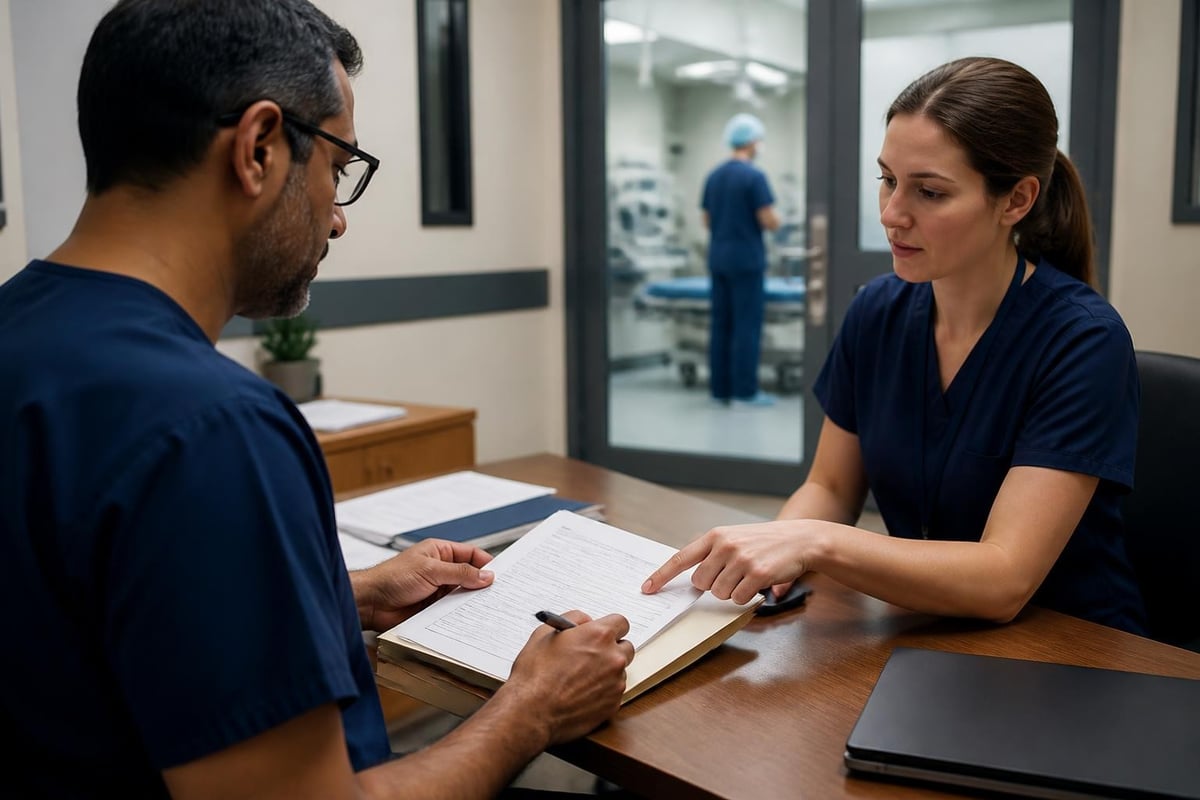
When sourcing locum cover, the distinction between procedural and non-procedural roles matters. An anaesthetist filling a theatre list needs current Advanced Life Support certification, familiarity with the specific anaesthetic machines in use, and recent experience in the types of cases scheduled. A consultation-only physician role has different requirements.
Facilities sometimes assume that any surgeon with the right college fellowship can step into a list. That's not always true. A colorectal surgeon may not be comfortable doing a thyroidectomy, even though both fall under general surgery. Clarifying scope of practice before confirming a booking saves everyone time.
Anaesthetics and Perioperative Medicine
Anaesthetists are one of the most frequently requested kinds of specialist doctors for locum work. Operating theatres can't run without them, and leave or sick days create immediate gaps.
Anaesthetics as a specialty has broadened. Beyond the operating theatre, anaesthetists now work in pain clinics, intensive care, and pre-admission assessment. A locum anaesthetist might be covering elective lists, obstetric anaesthesia, or procedural sedation in radiology. The ACGME classifications used in the United States provide a useful reference for understanding how anaesthesiology subspecialises, even though Australian training pathways differ.
For hospitals managing high-volume surgical programs, having a reliable pool of credentialled anaesthetists is not optional. BPMed's Specialist and VMO Placement model ensures that anaesthetists placed into theatre lists have been screened for the specific case mix they'll encounter, whether that's paediatric cases, obstetric epidurals, or complex cardiothoracic work.
Intensive care medicine often overlaps with anaesthetics. Many intensivists hold dual fellowship in both specialties. ICU cover requires a different mindset than theatre work. The hours are longer, the acuity is unpredictable, and the expectation is that the doctor will manage ventilated patients, complex drug infusions, and family discussions without immediate backup.
Medical Specialties: Physician Roles
Physician specialties make up a large proportion of the kinds of specialist doctors working across Australian hospitals. These roles are generally ward-based or consultation-based rather than procedural, though some physicians do perform interventions.
Cardiology includes both interventional cardiologists who perform angiograms and stenting, and non-interventional cardiologists who manage heart failure, arrhythmias, and preventive cardiology. A facility needing cardiology cover must specify which type. An interventional cardiologist expects access to a catheterisation lab and trained support staff.
Gastroenterology and respiratory medicine follow similar patterns. Gastroenterologists scope, perform ERCPs, and manage inflammatory bowel disease in outpatient clinics. Respiratory physicians run sleep clinics, perform bronchoscopies, and manage ventilated patients in ICU. The scope of a locum role depends on what the facility can support.
Endocrinology, rheumatology, nephrology, and infectious diseases are largely consultation-based specialties. These kinds of specialist doctors are often brought in to provide advice on complex inpatients or to manage outpatient clinics. Locum demand tends to be lower, but when it exists, it's usually for extended placements rather than single shifts.
Hospital Medicine and Internal Medicine
Some hospitals use the term hospitalist to describe physicians who manage general medical inpatients without a specific subspecialty focus. Others prefer internal medicine physician. In either case, these doctors handle undifferentiated medical admissions, coordinate with subspecialists, and manage discharge planning.
Locum demand for hospitalists is consistent. Medical rosters are large, turnover is frequent, and short-term gaps are common. Unlike highly subspecialised roles, a good internal medicine physician can usually adapt to most metropolitan or regional hospitals without extensive orientation, provided the case mix isn't too far outside their usual practice.

Obstetrics, Gynaecology, and Paediatrics
Obstetrics and gynaecology is often treated as a single specialty, but the skill sets diverge. An obstetrician managing labour ward needs to be comfortable with emergency caesarean sections, instrumental deliveries, and neonatal resuscitation. A gynaecologist doing elective laparoscopic surgery may not have recent obstetric experience.
For hospitals with birthing services, having 24/7 obstetric cover is a regulatory requirement in most states. Locum obstetricians filling these rosters need current ALSO (Advanced Life Support in Obstetrics) or equivalent, indemnity insurance that covers obstetrics (which is expensive and sometimes hard to arrange at short notice), and credentialling that includes operative deliveries if they'll be the senior doctor on call.
Paediatrics covers newborns through to adolescents. General paediatricians manage medical admissions in children, but many paediatric subspecialties exist: paediatric cardiology, paediatric surgery, neonatology, paediatric emergency medicine. A hospital advertising for a paediatrician needs to specify what they actually need. A neonatologist is not the same as a general paediatrician, and a children's hospital will have very different requirements than a regional base hospital seeing occasional paediatric presentations.
Facilities sometimes underestimate how specialised paediatric care has become. A registrar trained in adult medicine should not be covering a paediatric ward without supervision. The dosing is different, the pathology is different, and the medico-legal risk is higher.
Psychiatry and Mental Health Specialties
Psychiatry is one of the kinds of specialist doctors where locum demand has increased sharply over the past five years. Mental health presentations have risen, inpatient psychiatric units are often at capacity, and workforce shortages are well-documented.
Psychiatrists work in inpatient units, emergency departments, consultation-liaison services, and outpatient clinics. The work varies significantly. An inpatient psychiatrist might be managing acute psychosis, involuntary treatment orders, and complex pharmacotherapy. A consultation-liaison psychiatrist sees medical and surgical inpatients with comorbid mental health conditions, often delirium or adjustment disorders.
Forensic psychiatry, child and adolescent psychiatry, and addiction medicine are further subspecialties. A hospital requiring psychiatric cover should clarify the patient population, the legal framework (particularly around involuntary treatment), and whether the role includes on-call or after-hours work. Not all psychiatrists are comfortable with acute inpatient work, and credentialling often requires evidence of recent experience in that setting.
The American Medical Association's overview of physician roles provides useful context on how psychiatrists differ from other mental health professionals, a distinction that's sometimes blurred in multidisciplinary team settings.
Emergency Medicine
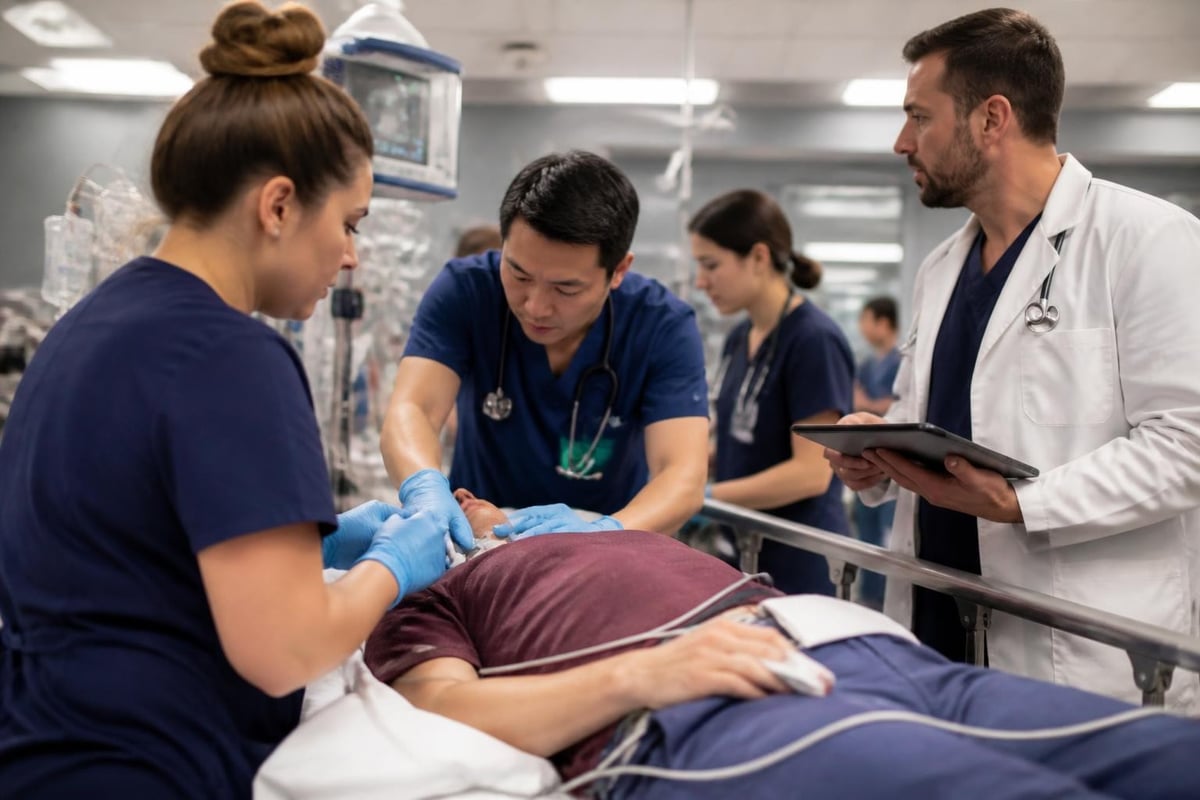
Emergency medicine is its own specialty, with dedicated training programs and college fellowship through the Australasian College for Emergency Medicine (ACEM). Emergency physicians manage undifferentiated patients, perform procedures, coordinate with other specialties, and make high-stakes decisions under time pressure.
Locum emergency physicians are in high demand. EDs operate 24/7, and even a single unfilled shift can mean downgrading the department or diverting ambulances. The challenge for facilities is ensuring that the locum doctor has the right level of experience. A consultant emergency physician can manage a resuscitation bay, lead a trauma team, and supervise junior staff. A junior registrar cannot.
Credentialling for emergency medicine needs to include procedural skills: intubation, central line insertion, procedural sedation, ultrasound. Some facilities also require APLS (Advanced Paediatric Life Support) or trauma qualifications depending on their patient mix. For regional hospitals, the emergency physician may also need to be comfortable with obstetric emergencies or managing ICU patients until retrieval arrives.
Retrieval and Pre-Hospital Medicine
Some emergency physicians subspecialise in retrieval medicine or pre-hospital care. These doctors staff helicopters, coordinate inter-hospital transfers, and manage patients in non-hospital environments. It's a small but highly specialised area, and locum opportunities exist primarily for planned leave or training cover.
Radiology and Pathology
Radiology and pathology are sometimes called the "hidden specialties" because patients rarely meet these kinds of specialist doctors directly. That doesn't make them less critical.
Radiologists interpret imaging, perform interventional procedures, and increasingly provide real-time decision support in multidisciplinary meetings. Subspecialties include neuroradiology, musculoskeletal radiology, interventional radiology, and paediatric radiology. A locum radiologist covering a general roster needs to be comfortable with CT, MRI, ultrasound, and plain film reporting. An interventional radiologist needs access to an angiography suite and trained support staff.
Pathologists analyse tissue samples, blood tests, and microbiology cultures. Subspecialties include histopathology, haematology, chemical pathology, and microbiology. Locum demand is less frequent than for clinical roles, but extended placements do occur, particularly when a senior pathologist goes on long service leave or parental leave.
Matching the Right Specialist to the Right Role
Understanding the different kinds of specialist doctors is only the starting point. Making a placement work requires matching clinical skills, credentialling status, and personal preferences to what the facility actually needs.
A hospital requesting "a surgeon" could mean a general surgeon for an appendix list, a vascular surgeon for an AAA repair, or an ENT surgeon for a tonsillectomy list. The credentialling requirements, equipment needs, and support staff differ for each. Mismatches create delays, cancelled cases, and dissatisfied clients.
For facilities managing complex rosters across multiple specialties, working with a recruitment partner who understands these distinctions saves time. BPMed's model involves clinical oversight before placements are confirmed, so the match is right from the outset. That's particularly important for specialties like anaesthetics, ICU, and surgery where scope of practice and procedural competence must align.
The AAMC career resources provide helpful background on how specialty training pathways differ, which is relevant when assessing an overseas-trained doctor's equivalence to Australian standards.
Subspecialisation and Scope Creep
One complicating factor in 2026 is that many kinds of specialist doctors have subspecialised to the point where their scope of practice is narrower than their college fellowship suggests. A cardiologist who has spent the last decade doing only interventional work may not be comfortable managing a general cardiology ward. A surgeon who exclusively does breast oncology may decline a general surgical on-call roster.
This isn't a problem with the doctors. It's a reflection of how medicine has evolved. But it does mean that facilities and recruiters need to ask specific questions about what a doctor has actually been doing, not just what their qualifications permit.
Scope creep in the opposite direction also occurs. Some doctors work outside their credentialled area because a facility is desperate for cover. That creates risk for everyone involved. If a complication occurs and the doctor wasn't appropriately credentialled, the hospital's indemnity may not respond, and the doctor's own insurance could be voided.
The WHO guidance on health worker classification offers an international perspective on how medical roles are categorised, which can be useful when comparing credentials across countries.
Credentialling and Compliance Across Specialties
Every specialty has its own credentialling nuances. Anaesthetists need evidence of recent theatre work. ICU specialists need CICM fellowship or equivalent. Surgeons need logbooks showing case numbers in the specific procedures they'll be performing. Psychiatrists working in forensic units may need police checks beyond the standard Working With Children clearance.
For locum agencies, keeping this straight across hundreds of doctors and dozens of specialties requires systems, not just goodwill. Credentialling has to be verified before a doctor is offered to a facility, not after they've started. That's where BPMed's ISO 9001:2015 certification and in-house clinical oversight provide an advantage. The process is standardised, audited, and overseen by someone who understands what each specialty actually requires in practice.
Indemnity insurance is another variable. Obstetrics, neurosurgery, and some procedural specialties carry higher premiums. A doctor working primarily in low-risk areas may not have coverage that extends to higher-risk work, even if they're technically qualified to do it. Checking this before a placement is confirmed avoids nasty surprises.
Regional and Metropolitan Differences
The kinds of specialist doctors needed in regional hospitals often differ from metropolitan tertiary centres. A regional hospital might need a general physician who can also manage ICU patients, perform endoscopies, and cover the emergency department out of hours. A metropolitan teaching hospital wants subspecialists who focus on a narrow clinical area.
Locum doctors moving between these environments need to understand the difference. A subspecialist accustomed to working in a team with multiple consultants, 24-hour imaging, and immediate access to pathology may struggle in a regional setting where they're the only doctor on site after 5 p.m. Conversely, a generalist used to managing everything might find a tertiary centre too siloed and protocol-driven.
Best Practice Medical's experience across both metropolitan and regional placements means these differences are flagged upfront, not discovered during the first shift. For doctors considering locum work, reading through resources like how to make locuming work for you provides practical context on what to expect in different environments.
Workforce Trends and Specialty Demand
Some kinds of specialist doctors are harder to recruit than others. Psychiatrists, anaesthetists, and emergency physicians are consistently in demand. Geriatricians, palliative care physicians, and rural generalists are also hard to find, though locum opportunities in those areas are less frequent because many of these roles are salaried and planned around continuity of care.
Surgical specialties see locum demand driven by planned leave, conference attendance, or gaps while a permanent appointment is being filled. These placements tend to be block bookings rather than ad hoc shifts, and they require more lead time to arrange because credentialling is more complex.
The MedlinePlus directories provide a useful patient-facing resource for understanding different specialties, which can help when explaining to non-clinical stakeholders why a particular kind of specialist doctor is needed for a specific role.
Visiting Medical Officers and Sessional Work
Many kinds of specialist doctors work as Visiting Medical Officers (VMOs) rather than salaried employees. This is particularly common in private hospitals and for procedural specialties. VMOs are contracted to provide specific sessions: a surgical list, an outpatient clinic, or an endoscopy session.
Locum VMO work follows the same pattern but for shorter durations. A hospital might need a VMO surgeon to cover a list while their regular surgeon is on leave, or an anaesthetist to fill a theatre session. These placements are usually confirmed weeks in advance, credentialling is done through the hospital's existing VMO processes, and the doctor is paid per session rather than per hour.
For facilities managing complex VMO rosters across multiple specialties, BPMed's clinical oversight model ensures that the doctor placed into a VMO session has the right credentials, the right case experience, and the right procedural skills before the booking is locked in.
Telehealth and Specialist Consultations
Telehealth has changed how some kinds of specialist doctors provide care. Psychiatry, endocrinology, and some consultation-heavy specialties now deliver much of their outpatient work via video. Telehealth has also enabled regional hospitals to access specialist advice without needing the specialist on site.
For locum work, telehealth creates new possibilities. A cardiologist can provide remote consultations to a regional hospital without travelling. A psychiatrist can cover outpatient clinics from another state. The technology is straightforward, but credentialling remains important. Telehealth doesn't eliminate the need to verify qualifications, indemnity insurance, and AHPRA registration.
Some specialties are less suited to telehealth. You can't perform surgery or anaesthesia remotely, and emergency medicine requires physical presence. But for specialties where locum demand is driven by outpatient work, telehealth has increased the available pool of doctors.
Training and Supervision Requirements
Some kinds of specialist doctors work in training environments where supervision is mandatory. Registrars, junior consultants, and international medical graduates on limited registration all require oversight from a senior specialist.
For hospitals, this means that filling a roster gap isn't always as simple as booking a doctor. If the doctor requires supervision, the facility needs to ensure that a supervisor is available. If the doctor is working toward fellowship, the placement needs to meet college training requirements.
Locum agencies sometimes overlook this. A hospital books what they think is a standalone consultant and discovers on day one that the doctor is a registrar who needs direct supervision. That's a credentialling failure, and it creates risk. BPMed's clinical oversight model includes verifying training status and supervision requirements before any placement is confirmed.
International Medical Graduates and Specialist Recognition
Australia relies heavily on international medical graduates (IMGs) across many kinds of specialist doctors. IMGs bring skills, experience, and often a willingness to work in regional or hard-to-staff areas. But the pathway from overseas training to Australian specialist recognition is complex.
The Australian Medical Council assesses whether an IMG's qualifications are equivalent to Australian standards. Some specialties have more streamlined pathways than others. A UK-trained surgeon with FRCS usually gains recognition relatively quickly. A doctor trained in a non-comparable system may need to complete additional exams, supervised practice, or workplace-based assessments.
For locum agencies and hospitals, understanding where an IMG sits in this process is critical. A doctor with full specialist registration and college fellowship can work without restrictions. A doctor on limited registration or undertaking an assessment pathway may have scope limitations, supervision requirements, or geographic restrictions.
The ABMS specialty listing provides a useful reference point for how U.S. specialties align with Australian equivalents, which is relevant when assessing North American-trained IMGs.
The different kinds of specialist doctors working across Australian healthcare reflect decades of medical specialisation, evolving training pathways, and patient demand for expertise in narrow clinical areas. For facilities managing rosters and recruitment, understanding these distinctions is what separates a functional placement from a credentialling failure. Best Practice Medical connects hospitals with the right specialists for the right roles, backed by clinical oversight and a credentialling process that's built for the realities of modern specialist practice.