

A medic in Australia is either a registered paramedic, who works in ambulance and pre-hospital care, or a doctor, who trains through medical school, internship and specialty training. "Medic" is also the title used for medical technicians in the Australian Defence Force. Each pathway has its own degree, registration body and pay structure, and the right one depends on whether you want to work on the road, in a hospital or practice, or in uniform.
This guide covers what each role involves, how training and registration work, what the work pays, and where locum work fits for doctors who want flexibility.
What does a medic in Australia actually do?
A medic in Australia assesses, treats and transports patients, or in the case of a doctor, diagnoses and manages them across a full episode of care. The daily work differs a lot by role.
Paramedics attend emergencies, from cardiac arrests and road trauma to falls in aged care facilities. They assess the patient, start treatment, and decide where to take them. Doctors work in emergency departments, wards, operating theatres, clinics and rural hospitals. Defence medics treat personnel in the field and on base, often under the supervision of a medical officer.
The roles overlap more than people expect. Paramedics hand over to emergency doctors dozens of times a shift, and rural doctors frequently work alongside ambulance crews on retrieval and transfer decisions. Understanding both sides of that handover is useful if you plan to work in a regional hospital.
What is a paramedic called in Australia?
In Australia, the title is "paramedic", and it is a protected title regulated by the Paramedicine Board of Australia. People often say "ambo" informally, and "medic" is common shorthand, but only registered practitioners can legally call themselves paramedics.
Within services, the job titles vary by state and clinical level. You will see ambulance paramedic, intensive care paramedic, critical care paramedic and extended care paramedic. Some services still use "ambulance officer" for entry-level or non-transport roles, though this is less common than it used to be.
How do you become a paramedic in Australia?
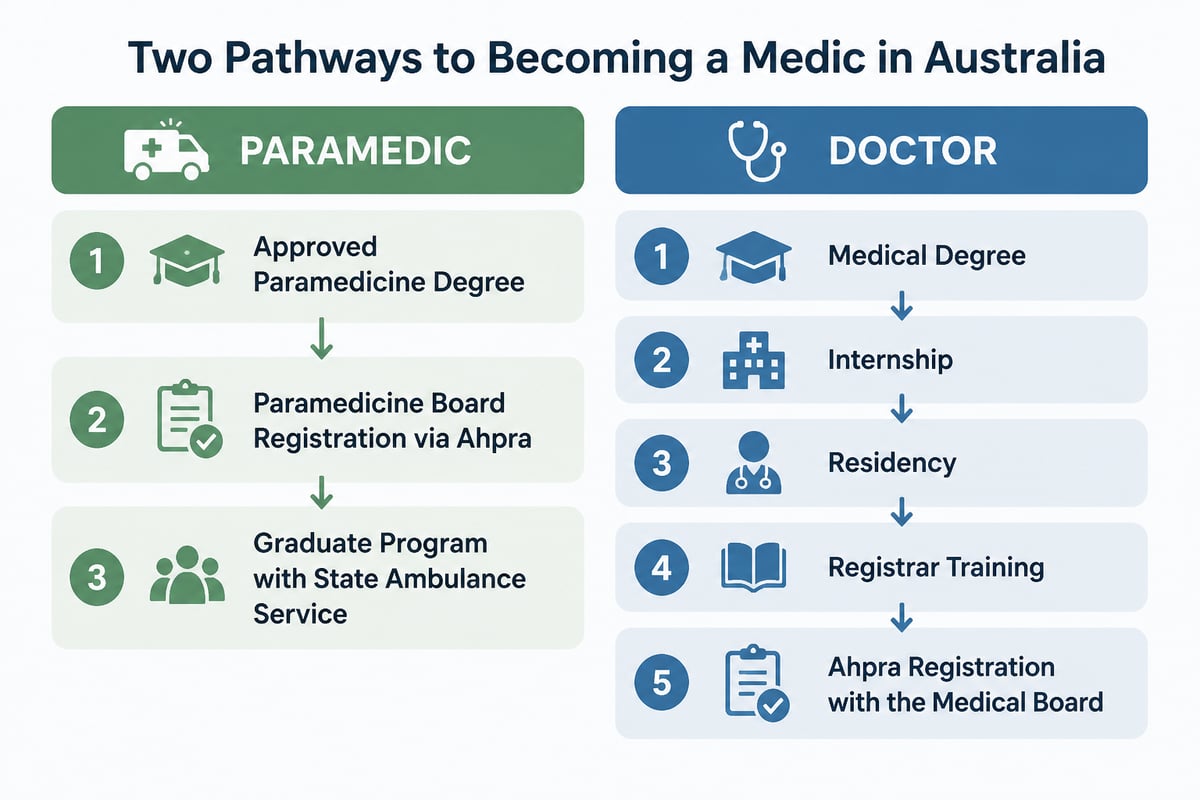
You become a paramedic by completing an approved paramedicine qualification, registering with the Paramedicine Board of Australia through Ahpra, and then applying to an ambulance service or private provider. Most people complete a bachelor degree, though graduate-entry and double-degree options exist.
Registration is a hard requirement before you start work. Graduates must be registered with the Paramedicine Board of Australia before working as a paramedic, and the Board opened applications for 2025 graduates on 18 September 2025. The process involves setting up an Ahpra portal, submitting certified documents and proof of identity, and paying the required fees. Leave time for the certification step, because it is where applications most often stall.
Employers add their own requirements on top. Ambulance Victoria, for example, requires a recognised paramedicine qualification, suitable experience and registration with the Board through Ahpra. Its eligibility rules also include Australian, New Zealand or permanent-resident status and a full driver's licence, or at least one year holding a probationary P2 licence. Other states set similar conditions, so check the specific service before applying.
If you trained overseas, your qualification goes through an assessment by the Board, which can result in registration, a requirement for further study or an exam, or refusal. Start that assessment early, as it can take months.
Can paramedics cric?
Scope of practice depends on the service, the state and the clinician's authorisation level, and advanced airway procedures are generally limited to senior clinical roles within the protocols of the employing service.
Scope of practice depends on the service, the state and the clinician's authorisation level. A graduate paramedic works within a defined set of skills and medications, then expands that scope through supervised experience and further study. This is one reason the progression from basic to intensive care paramedic matters for career planning: the airway, drug and procedural skills that distinguish senior clinicians are earned stepwise.
What is the doctor pathway?
The doctor pathway runs through a medical degree, a hospital internship, residency years and then either specialty training or a move into general work such as emergency or hospital medicine. It is a longer road than paramedicine, and the stages are fixed by the Medical Board of Australia and the specialist colleges.
In plain terms, the stages are:
Medical school. A bachelor degree of five to six years, or a postgraduate medical degree of four years after a prior degree.
Internship. A supervised first postgraduate year in a hospital, after which you get general registration.
Residency. Further hospital years, usually rotating through medicine, surgery and emergency while you decide on a specialty.
Registrar and specialty training. Entry to a college program such as emergency medicine, anaesthetics or surgery, taking roughly three to seven years depending on the specialty.
Each stage has a recognised role in the system. Junior doctors fill internship, residency and registrar roles in public and private hospitals, and our registrar and JMO placement service places doctors at these levels across NSW metropolitan hospitals, with secondary coverage in regional and interstate facilities. The consultants briefing those doctors know the difference between a metropolitan teaching hospital and a regional base hospital, which matters because the supervision, caseload and on-call expectations are quite different.
What are the registration requirements for doctors and paramedics?
Both professions must register with Ahpra before practising, but each has its own National Board and its own standards. Doctors register with the Medical Board of Australia, and paramedics with the Paramedicine Board of Australia.
The standards cover areas such as English language skills, criminal history, professional indemnity insurance, continuing professional development and recency of practice. Ahpra publishes these in its registration standards, and they apply whether you are a new graduate or an experienced clinician returning after time away.
For doctors, there is an added layer. International medical graduates may need an assessment pathway through the Australian Medical Council or a specialist college, and may be registered with conditions, such as working under supervision or in an area of need, until they meet the full requirements. If you are weighing up whether a locum career is open to you at your stage, our guide on eligibility to become a locum doctor walks through the practical checks.
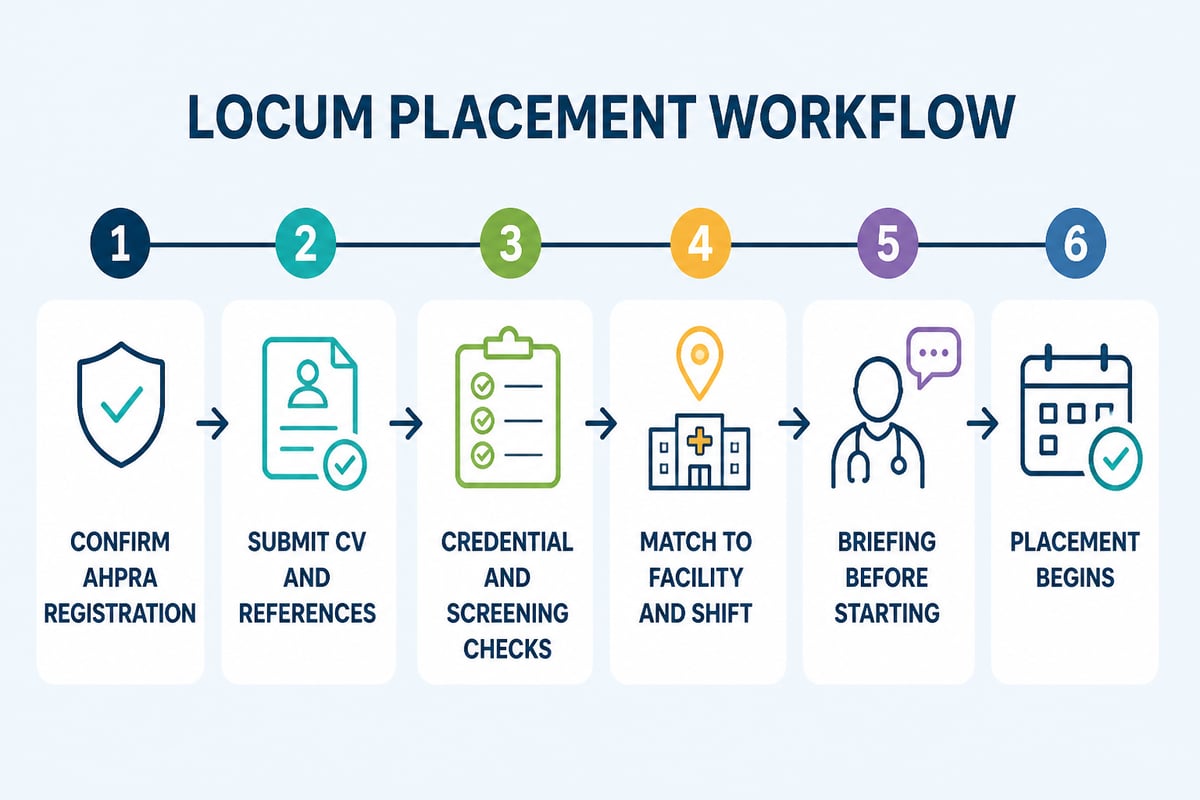
Background and credential screening sits alongside registration. Employers and agencies verify identity, registration status, work rights, references and immunisation records before a placement starts. Background and medical screening providers offer software that gives you an idea of what the checks cover in practice. Having your documents certified and ready shortens the time between accepting a role and starting it.

What kind of doctor makes $600,000 a year in Australia?
Incomes at the top of the range are generally earned by experienced specialists, often in private practice, and typically follow many years of specialist training plus building a practice.
Most doctors earn well below that figure, particularly in the early years. Salaried junior doctors are paid under state award agreements, and pay rises with each year of seniority and with out-of-hours work. Income for specialists varies widely based on whether they are salaried, in private practice, or doing a mix, and on how much procedural work they do.
Locum work changes the picture for some doctors, because daily and hourly rates in areas of need can be high, especially in rural and remote settings where cover is hard to find. Rates depend on specialty, location, shift length and urgency, so treat any single number with caution. Our breakdowns of locum doctor pay and locum doctor salary cover how those rates are structured and what affects them.
What does a medic do in the Australian Defence Force?
A defence medic is a trained medical technician who provides first-line care to personnel in training, on deployment and on base. The Army, Navy and Air Force each employ medics, and the Royal Australian Army Medical Corps is the main Army medical element.
Defence medics are not registered paramedics by default. Their training is through Defence, and their scope sits within the military medical chain of command, supervised by medical officers. Some go on to civilian paramedicine or nursing study, and the field experience is well regarded by employers. Doctors can also serve as defence medical officers, either full-time or in the reserves, which gives a different route into senior clinical and leadership roles.
Where does locum work fit for a medic in Australia?
For doctors, locum work is a way to work across different hospitals and regions on your own schedule, filling short-term gaps left by leave, vacancies or seasonal demand. It suits registrars between training posts, specialists wanting more control over their time, and doctors returning to practice who want to test a setting before committing.
The demand is real. Regional and rural facilities in particular struggle to keep permanent rosters filled, which is a theme we explore in why Australia's medical workforce is under increasing pressure and in our piece on how to attract more doctors to regional Australia. A good locum placement reflects both sides: the facility gets cover that matches its case mix, and the doctor gets a role that fits their skills, registration conditions and lifestyle.
Paramedics have a version of this too, through private event medical services, mining and remote-site work, and agency shifts, though it is a smaller market than medical locum work.
How do you choose the right pathway?
Choose by working backwards from the day-to-day work you want and the time you are willing to train. Paramedicine gets you into clinical practice in about three years, with shift work and a strong emergency focus. Medicine takes a decade or more to reach specialist level but opens a wider range of settings, including procedural and consulting work.
A few questions help narrow it down:
- Do you want to work mostly in pre-hospital and emergency settings, or across an entire patient journey?
- How long are you prepared to study before earning a full clinical income?
- Do you want the option of flexible, location-independent work later, such as locum shifts?
- Are you drawn to leadership, teaching or research roles that typically sit within medicine?
If you are already qualified and thinking about a move, a CV that clearly states your registration, scope and recent practice makes a difference to how quickly agencies and employers can place you.
What career progression looks like in each pathway
Progression in paramedicine runs from graduate paramedic to senior, then to intensive care, critical care or extended care roles, and into education, clinical leadership or operations management. Each step typically requires further study and supervised experience, and not every paramedic needs to move up the clinical ladder to have a long career.
In medicine, progression runs from intern through resident and registrar to consultant, with fellowship, subspecialty training and academic or management roles beyond that. Some doctors move sideways into medical administration, medico-legal work or telehealth.
The practical point is the same in both: your registration status, recency of practice and documented skills are what employers and agencies check first, so keep them current.
FAQ
What is the difference between a paramedic and a doctor?
A paramedic is a registered clinician who provides emergency and pre-hospital care, usually after a three-year degree, while a doctor completes a medical degree followed by internship and specialty training. Paramedics work within service protocols and authorisation levels, whereas doctors have a broader scope for diagnosis, prescribing and procedures.
What do paramedics do day to day?
Paramedics respond to emergency calls, assess and stabilise patients, give medications and treatments within their scope, and transport patients to hospital. Many also handle non-emergency transfers, community care and patient handover to emergency department staff.
Do you need to be registered to work as a medic in Australia?
Paramedics and doctors both need Ahpra registration through their respective National Boards before they can practise. Defence medics work under Defence's own training and supervision, which is separate from Ahpra registration.
If you are a doctor weighing up locum work, start by checking that your Ahpra registration is current and gathering your CV, references and immunisation records in one place. Best Practice Medical places doctors in locum and registrar roles across Australia, screens candidates before they start, and briefs them on what to expect at each facility, so you can get in touch to talk through what suits your registration, specialty and availability.