

When a hospital requests a medically trained professional for a shift, that phrase carries more weight than most realise. It's not just a credential on paper or a registration number in a database. Being medically trained means you've completed a structured pathway of education, supervised practice, and assessment that equips you to make clinical decisions under pressure. It also means your competencies are verifiable, your scope is defined, and your indemnity is current. In locum recruitment, the difference between someone who is medically trained and someone who isn't becomes immediately apparent the moment the shift starts.
What Medically Trained Actually Means
The term "medically trained" refers to clinicians who have completed accredited medical education and hold recognised qualifications that permit them to practise within a defined scope. In Australia, this starts with an undergraduate medical degree from a recognised institution, followed by internship and further training in a specialty or as a generalist. The competency-based medical education framework underpins how most modern programs are structured, ensuring that training produces measurable clinical outcomes rather than just time spent in a rotation.
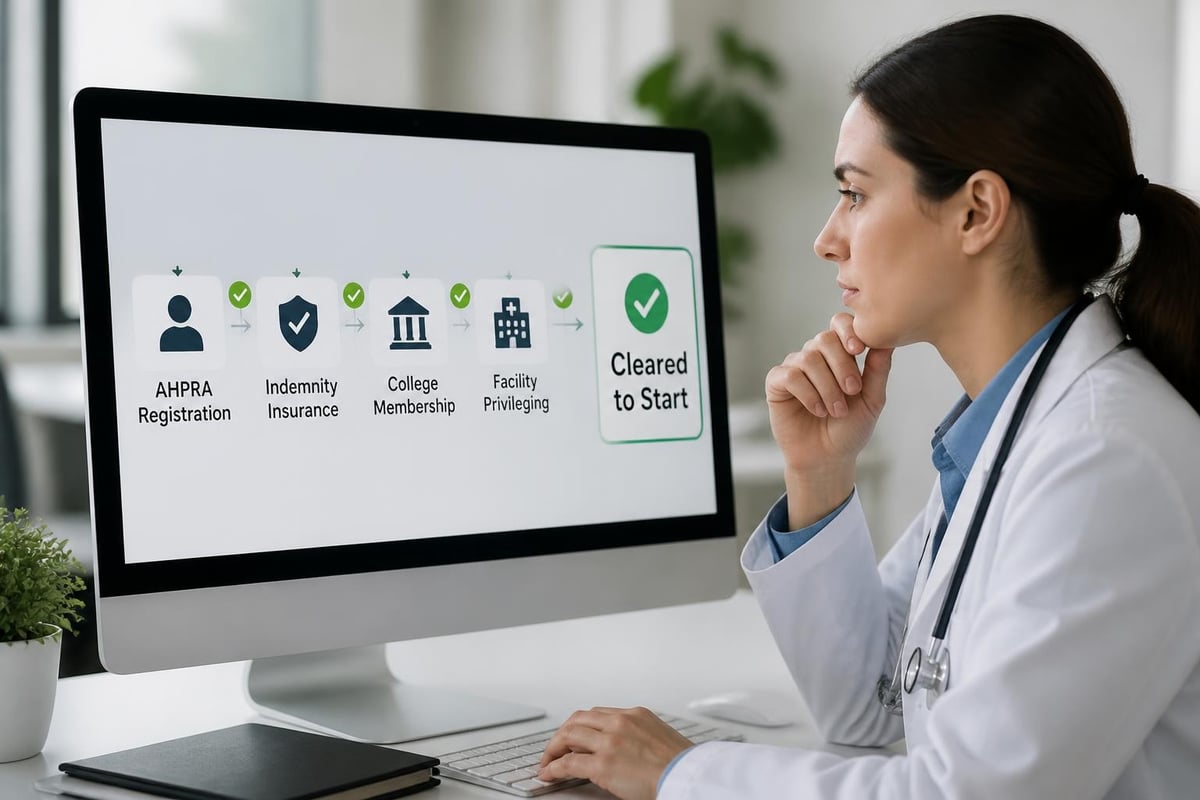
For locum recruitment purposes, verifying that a doctor is medically trained involves more than checking AHPRA registration. It requires confirming their college memberships, current indemnity insurance, immunisation status, and facility-specific requirements such as privileging for procedural work. Best Practice Medical runs this verification in-house before any placement is confirmed. Brad Nelmes, a practising clinician, oversees the credentialling process to ensure that what's on paper matches what the facility will see on the floor.

The ISO 9001:2015 certification behind this process means it's audited annually by an external body. That's a different standard to what most agencies operate under. When a hospital books a doctor through Best Practice Medical, they're booking someone whose credentials have been independently reviewed to a documented standard.
Training Pathways and Specialty Recognition
A doctor working in Emergency Medicine has followed a different training pathway than someone in Anaesthetics or O&G. Each specialty has its own college, its own fellowship requirements, and its own expectations around what "medically trained" looks like at different career stages. A PGY3 Registrar in Emergency isn't the same as a Fellow, and a hospital needs to know which level of training they're getting when they book a shift.
Best Practice Medical's consultants understand these distinctions because they work with these specialties daily. When a hospital requests cover for an ICU shift, the match isn't just about availability. It's about whether the doctor has ICU experience, whether they've done advanced life support recently, and whether they've worked in a tertiary or a regional ICU. The same applies to Surgery, Psychiatry, Paediatrics, and Anaesthetics. Each specialty has nuances in how training translates to competence.
Simulation and Procedural Competency
Simulation training has become a core component of how medically trained professionals develop and maintain procedural skills. Research shows that competency-based simulation improves both technical performance and clinical confidence, particularly for high-risk, low-frequency procedures. For locum doctors, this matters because a hospital booking a locum expects that doctor to perform procedures independently if the situation requires it.
A doctor who completed their training five years ago but hasn't maintained their procedural skills through simulation or supervised practice may still be registered, but they're not the same fit as someone who's actively performing those procedures. Credentialling for specialist placements includes checking recent procedural experience, not just historical training. That's why Best Practice Medical's specialist and VMO placements involve a higher level of credentialling specificity than junior doctor cover.
Continuing Medical Education and Competency Maintenance
Being medically trained isn't a one-time achievement. It requires ongoing education to remain current. The ACCME accreditation requirements provide a framework for how continuing medical education maintains clinical competence through structured, evidence-based learning activities. In Australia, AHPRA mandates continuing professional development as part of registration renewal, but the quality and relevance of that CPD varies widely.
For locum doctors, keeping up with CME while moving between facilities can be challenging. A doctor working three different hospitals in a month doesn't have the same access to in-house training as a permanent staff member. The responsibility to stay current falls entirely on the individual. Best Practice Medical's consultants brief doctors on facility-specific protocols before they start, but the underlying clinical knowledge and procedural competence must already be there.
Interprofessional Training and Team Integration
Medically trained professionals don't work in isolation. The WHO Framework for Action on Interprofessional Education highlights that effective clinical care depends on coordinated collaboration between doctors, nurses, allied health, and administrative staff. For locum doctors, integrating into an unfamiliar team on day one requires more than clinical knowledge. It requires an understanding of how different roles interact in different settings.
A tertiary metropolitan hospital operates differently to a regional base hospital. The nursing ratios are different, the after-hours support is different, and the escalation pathways are different. A medically trained doctor who's only ever worked in one type of environment will need time to adjust when they land in the other. Best Practice Medical's consultants understand this difference and brief doctors accordingly before placement.
Credentialling, Privileging, and Scope Verification
Hospitals verify a doctor's training and competence through a formal credentialling and privileging process. This process assesses education, training, experience, and current competence before granting permission to perform specific procedures or manage specific conditions. For permanent staff, this happens once during onboarding. For locum doctors, it happens every time they start at a new facility.
Best Practice Medical manages this on behalf of both the doctor and the facility. Doctor credentialling and compliance verification includes AHPRA registration, medical indemnity insurance, relevant college memberships, and facility-specific requirements. The process is managed in-house with clinical oversight, not outsourced to an offshore admin team. That means when a hospital books a locum, the credentialling has been done to the same standard they'd apply internally.
| Credentialling Component | What It Verifies | Renewal Frequency |
|---|---|---|
| AHPRA Registration | Right to practise in Australia | Annual |
| Medical Indemnity Insurance | Professional liability cover | Annual or per placement |
| College Membership | Specialty training status | Annual |
| Immunisation Status | Infection control compliance | Variable (typically 5-10 years) |
| Procedural Privileging | Competence for specific procedures | Per facility |
The table above shows the basic components of credentialling, but each facility adds its own requirements on top of this. Some require recent references from consultants who've supervised the doctor. Others require evidence of specific procedures performed in the last 12 months. Best Practice Medical's role is to gather and verify all of this before the booking is confirmed, so the facility doesn't have to chase it down themselves.
Medically Trained in Different Clinical Contexts
The scope of what a medically trained doctor can do depends on the setting. A Registrar in Psychiatry working in a metropolitan tertiary hospital has access to multidisciplinary teams, inpatient beds, and 24-hour consultant cover. The same Registrar working in a regional facility may be the only psychiatrist on site, with limited allied health support and no consultant physically present after hours. Both settings require a doctor who is medically trained, but the competencies needed to function safely are different.
Best Practice Medical places doctors across both metropolitan and regional facilities. The consultants know which doctors have regional experience and which don't. When a regional hospital requests cover, the match includes a conversation about after-hours support, patient acuity, and whether the doctor has worked in a similar environment before. That's not something a database algorithm can assess. It requires someone who knows the doctor and knows the facility.
Telehealth and Virtual Care Competencies
Telehealth has expanded the contexts in which medically trained doctors practise. The AMA Telehealth Resource Center provides guidance on how traditional clinical competencies translate to virtual care delivery. A doctor conducting a virtual consultation still needs to take a history, perform a remote examination, and make clinical decisions, but the absence of physical examination limits what can be assessed.
For locum work, telehealth creates both opportunities and constraints. A doctor with strong communication skills and experience in virtual care can provide valuable service to rural or underserved areas. A doctor who's never used a telehealth platform before will need support and orientation. Best Practice Medical's consultants discuss telehealth capabilities with doctors during the credentialling process, particularly for placements in rural or remote locations where virtual care may be part of the role.
Registrar and JMO Training Levels
Not all medically trained doctors are at the same level of experience. A PGY2 doctor is medically trained, but they're not the same as a PGY5 Advanced Trainee or a Fellow. Hospitals need to know what level of training they're getting when they book a shift. A metropolitan teaching hospital may be comfortable with a PGY3 Registrar covering overnight ED, but a regional base hospital with limited consultant support may need someone more senior.
Best Practice Medical's registrar and JMO placements take this into account. The consultants match the doctor's training level to the facility's requirements and the level of supervision available. A PGY2 working an overnight shift in a busy ED needs different support than a Fellow working the same shift. The credentialling process confirms training level through college membership and recent work history, not just self-reported experience.
Advanced Training and Fellowship Status
Fellowship status matters in specialist placements. A Fellow in Anaesthetics has completed their college exams and has met the training requirements for independent practice. An Advanced Trainee hasn't. Both are medically trained, but the scope of what they can do independently is different. Hospitals booking locum cover for complex cases or high-risk procedures need to know whether the doctor is a Fellow or a Trainee.
Best Practice Medical verifies fellowship status as part of the credentialling process. For specialist placements requiring a Fellow, the agency doesn't offer a Trainee as an alternative unless the hospital explicitly accepts that. The clinical oversight model ensures the match is right before the booking is confirmed, not after the doctor has already arrived on site.
Locum Work and Competency Verification
Locum doctors face unique challenges in maintaining and demonstrating their competency. Moving between facilities means they don't build the same longitudinal relationships with supervisors and colleagues that permanent staff do. Each placement is a fresh start, with new systems, new protocols, and new people. Being medically trained in this context means being able to adapt quickly while maintaining clinical standards.
Best Practice Medical's consultants brief doctors before each placement on what to expect. That includes information about the facility's EMR system, the rostering platform, the escalation pathways, and any recent changes to local protocols. This isn't substitute for orientation on arrival, but it reduces the cognitive load of the first shift and allows the doctor to focus on clinical work rather than navigating unfamiliar systems.

Travel and accommodation coordination removes another layer of friction. For interstate and regional placements, Best Practice Medical manages the logistics so the doctor arrives prepared and on time. All arrangements are confirmed before departure, reducing the risk of last-minute changes that disrupt the placement.
Why the Term Matters in Recruitment
The phrase "medically trained" gets used loosely in some contexts, but in hospital recruitment it has specific meaning. A hospital booking locum cover is relying on that phrase to mean the doctor has verifiable qualifications, current registration, appropriate indemnity, and the clinical competence to do the work safely. If any of those components are missing, the phrase is misleading.
Best Practice Medical's ISO 9001:2015 certification provides independent assurance that the credentialling process meets a documented standard. That's not common in the recruitment industry. It means that when a hospital books a medically trained doctor through Best Practice Medical, the verification process has been audited by an external body. The hospital isn't just taking the agency's word for it.
Preferred Supplier Status and Procurement Efficiency
Best Practice Medical holds preferred supplier status with NSW, QLD, VIC, ACT, WA, Tasmanian and NT Health, as well as Ramsay Health Care and Healthscope. For hospital clients procuring locum services through a government panel, Best Practice Medical is already approved. This removes the procurement friction that comes with engaging a new agency and means a hospital can begin accessing Best Practice Medical's doctor network without a lengthy onboarding process.
Preferred supplier status matters because it reflects a pre-existing relationship built on demonstrated competence. State health departments don't grant preferred status without verifying that an agency's processes meet their standards. For hospital clients, this translates into faster access to medically trained professionals when cover is needed urgently.
The Practical Difference on the Floor
The difference between a medically trained doctor who's been properly matched and credentialled, and one who hasn't, becomes apparent within the first hour of a shift. The right doctor knows the systems, understands the scope, and integrates into the team without friction. The wrong doctor spends the shift asking basic questions, escalating inappropriately, or working outside their competence.
Best Practice Medical's consultants prevent this by matching based on specialty, credentialling status, facility type, and availability. A doctor who's worked similar shifts in similar hospitals before is more likely to perform well than someone stepping into an unfamiliar environment for the first time. That's not always avoidable in locum work, but it can be managed through better briefing and more accurate matching.
The 24/7 consultant support that backs every placement means doctors have someone to call if they're unsure about a facility-specific protocol or need clarification on scope. That's particularly important for after-hours shifts in regional facilities where on-site support may be limited. Being medically trained doesn't mean knowing everything. It means knowing when to ask and having someone available to answer.
What This Means for Hospitals and Doctors
For hospitals, booking a medically trained locum should mean confidence that the doctor has been properly vetted and matched to the role. For doctors, accepting a locum placement should mean clarity about what's expected, what support is available, and what the facility environment will be like. Both sides benefit when the credentialling and matching process is rigorous.
Finding locum work through an agency that manages credentialling, logistics, and placement support means doctors can focus on clinical work rather than administration. For hospitals, working with an agency that holds preferred supplier status and ISO 9001:2015 certification means accessing medically trained professionals without the procurement and verification burden falling entirely on internal staff.
The phrase "medically trained" carries weight because it represents years of education, supervised practice, and ongoing professional development. In locum recruitment, verifying that weight is the difference between a successful placement and a shift that doesn't meet expectations.
Understanding what medically trained means in practical terms helps both hospitals and doctors make better decisions about locum placements. When credentialling is thorough and matching is precise, the outcome is better care delivery and less administrative friction on both sides. If you're looking for medically trained professionals who've been properly vetted and matched to your facility's needs, Best Practice Medical connects exceptional doctors with extraordinary locum opportunities across Australia through thorough candidate screening and placement systems backed by clinical oversight and ISO 9001:2015 certification.